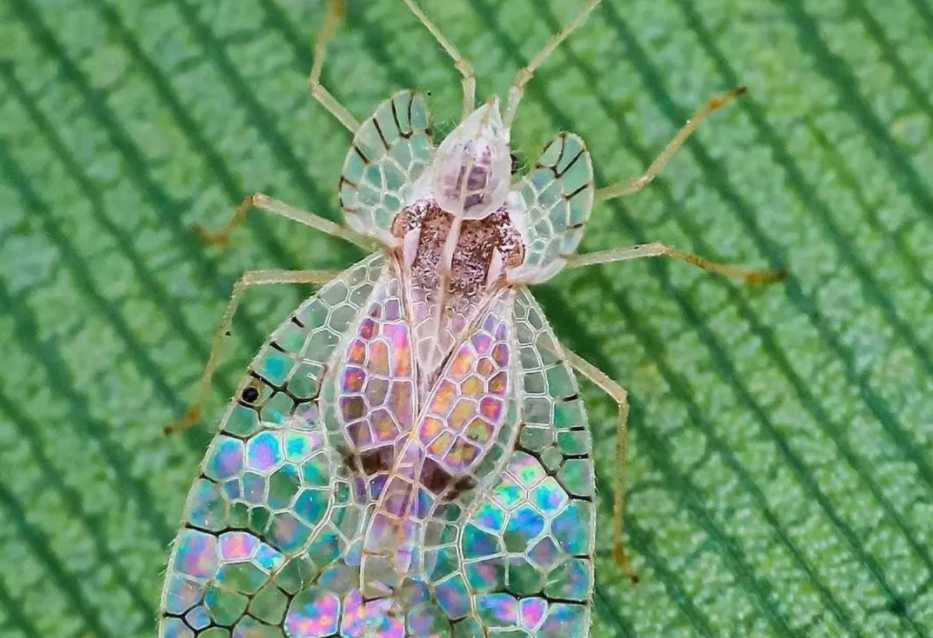
The lace bug’s exoskeleton is a marvel of evolutionary design: its thoracic shield and wings are riddled with air-filled chambers and fine ridges, creating a lattice that refracts light into prismatic hues. Species like Corythucha ciliata display ebony frameworks against pale, almost transparent membranes, while others like Stephanitis takeyai feature amber or bronze-tinged patterns. This delicate armor serves dual purposes: the lattice structure disrupts the insect’s outline, aiding in camouflage among leaf veins, while the iridescence may deter predators or attract mates.
Despite their fragile appearance, lace bugs are hardy herbivores, using their piercing mouthparts to feed on plant sap. Their feeding can cause "stippling" on leaves, though most species do not severely damage ecosystems. For entomologists, these insects are living testaments to nature’s ability to blend functionality with beauty—proof that even the smallest creatures can carry the elegance of stained glass, a reminder that wonder lies in the details of the natural world.