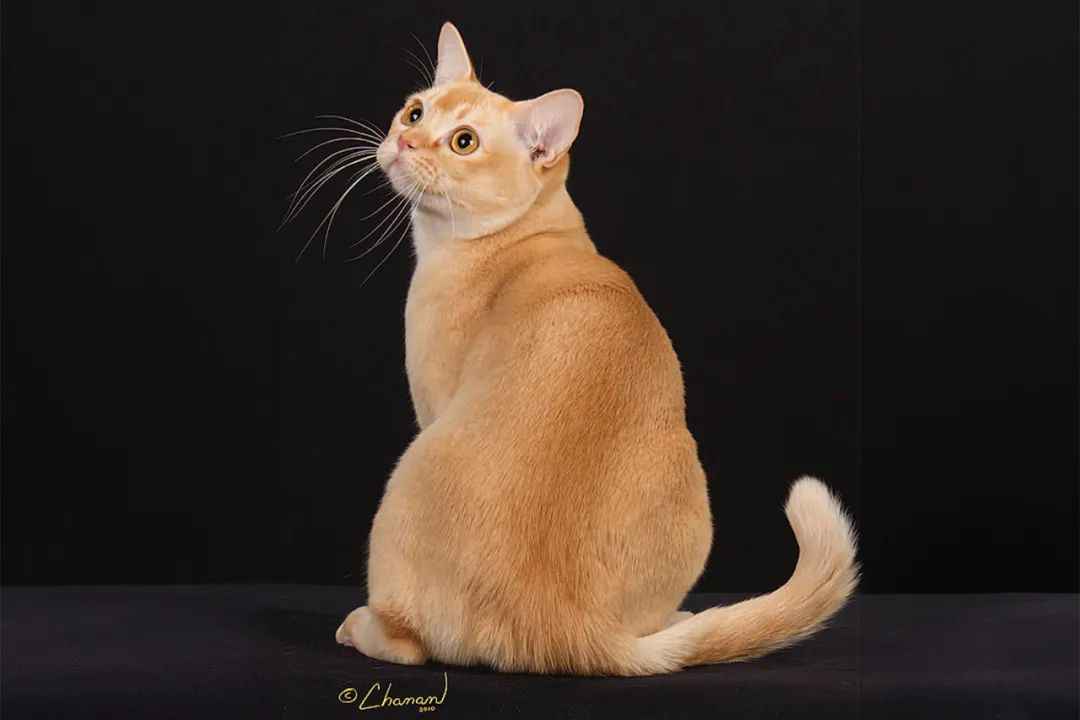
The European Burmese boasts a short, glossy coat in ten officially recognized colors, including brown, chocolate, blue, and tortoiseshell patterns—a significant departure from the limited palette of American Burmese cats. Its wedge-shaped head, high cheekbones, and slender limbs give it a regal stance, while the coat’s satin-like texture requires minimal grooming, appealing to busy households. Males typically weigh 3.5–7.5 kg, with females slightly smaller, embodying a balance of agility and grace.
Known for their dog-like loyalty, European Burmese cats thrive on human interaction and form deep bonds with their families. They are highly intelligent, playful, and adaptable, making them ideal companions for households with children or other pets. However, their sociable nature means they may develop separation anxiety if left alone for extended periods, highlighting the need for consistent companionship. Their vocalizations, softer than Siamese counterparts, add to their charm without overwhelming owners.
While generally robust, the breed is predisposed to certain genetic conditions. European Burmese cats, particularly those in the UK and Australia, face a fourfold increased risk of diabetes mellitus compared to other felines. Breeders also monitor for rare but severe issues like Burmese head defect, a congenital abnormality affecting skull development, and hypokalemia, a potassium deficiency causing muscle weakness. Regular veterinary check-ups and a balanced diet rich in protein are essential for maintaining their health.
The European Burmese played a pivotal role in revitalizing the Burmese gene pool during the mid-20th century, preventing inbreeding-related health crises. Today, their popularity continues to grow, with breeders worldwide preserving their unique traits. Whether gracing cat shows or curling up on a lap at home, the European Burmese remains a testament to the art of selective breeding and the enduring appeal of a feline companion that combines beauty, intelligence, and unwavering loyalty.